How Founders Build a Business That Can Grow. Part One.
Why does culture matter when building a business? Mark Switaj shares how core values, client service, focus, and avoiding shiny objects shape growth.
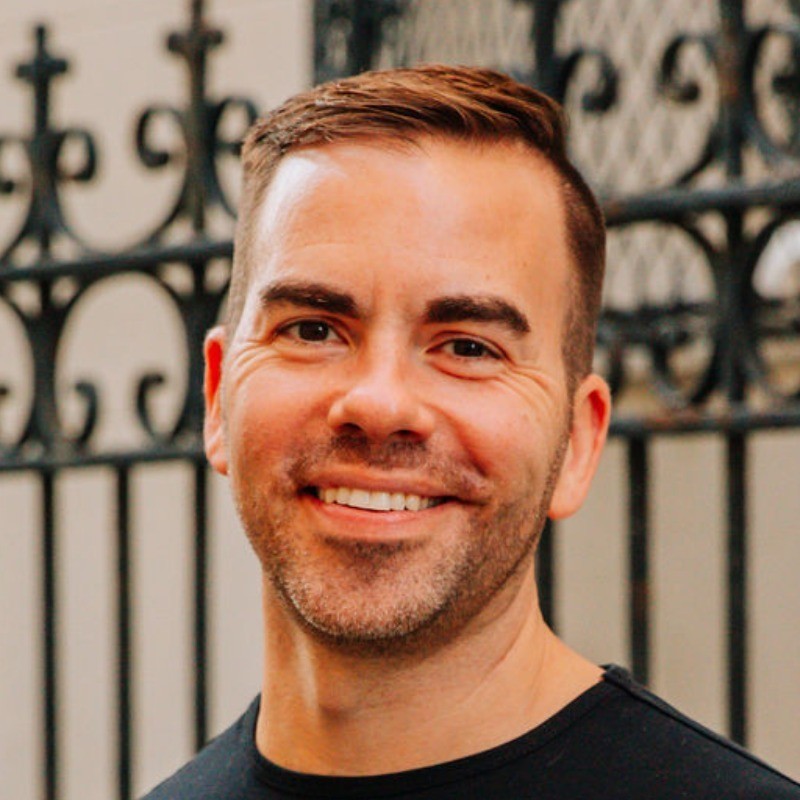
Mark Switaj
Sep 10, 2026
Financial Planning
Deductions
Culture can feel like a soft topic until you realize it influences nearly every decision a company makes.
In Part 1, Mark and Ro turn on the cameras immediately after one of The Owner's Assets' quarterly offsites to talk about what actually goes into building a business, from defining core values and putting the client first to resisting the shiny objects that can pull entrepreneurs in a dozen directions at once.
VIDEO TRANSCRIPT
Ro: Hey, everybody. It's Ro and Mark from The Owner's Asset. We're going to mix it up a little bit today because this is completely impromptu.
We just finished one of our quarterly offsites, and I said, Mark, we have to turn the camera on and talk about the things we spend time talking about once a quarter in detail, but obviously talk about daily because they permeate our view of the world as entrepreneurs and what we're trying to do here at The Owner's Asset.
What I get asked a lot when I'm out talking to people is, how do you guys structure your days? How do you structure your business?
I think this is technically your fourth company. And company number three, the one that preceded this, is just shy of a nine-figure business.
So there's a lot more than just going around putting your nose in a book and learning about pensions. You actually run the business.
I want you to download the key pillars of how you think about business and entrepreneurship.
Let's start with what we spent most of our time talking about, which is culture.
We probably spend more time talking about culture than any of the other aspects of our business. How do you intentionally build culture? Why is it so important to you, even though it's just the two of us and we've known each other for 16 or 17 years?
Why do you believe culture is the starting point for building a business?
Mark: First, thank you for starting with culture.
We went to business school together. Culture was in many of our classes. Harvard Business Review probably has culture on the cover every fifth edition.
And here we are, two dudes talking about culture.
I like the phrase culture is the cake.
Think about a cake. Culture is the actual cake. The icing is the sugar on top.
The swag, the shirts you and I wear, the dinners we might buy for each other when we're traveling and visiting a client, those are icing on the cake.
That's not the cake.
The cake is harder to put your finger on. It's sensed. It's felt. It's amorphous.
That's culture.
Culture is what drives an organization. From culture comes trust. It creates a team that's aligned.
How do you describe culture using words?
I would call those core values.
Core values are what define an organization.
Ro: Before we get into our core values, I want to peel back something you said.
You said culture doesn't generally feel like a masculine term. I found that interesting because you came out of tech, and now you're in finance.
I've worked at a mutual fund. I've worked at a hedge fund. And culture can be a very strong concept in finance.
But as we talk about how you approach entrepreneurship, let's get into the core values that you and I have spent countless hours developing for our two-person enterprise.
Mark: What's neat about core values, from my experience, is that they're internal to an organization.
You don't often hear companies sharing their core values externally because culture is developed within a company and then creates an external impact.
Our first core value is:
Focus on what we do best.
You'll even see that when we present together.
When we're talking about the journey of an entrepreneur, that's often where I'm leaning in.
When we're talking about the strategies we employ, tax implications and the technical nuances, that's your background.
We're very different people. We're complements.
We're focusing on our strengths by design.
Ro: Is “focus on what you do best” your way of teaching niche, niche, niche? Or is that something different?
Mark: Maybe niche, but it's a slightly different mindset.
When you and I went to school, we took a diversified set of classes.
If you weren't good at a subject, maybe you got a tutor. The philosophy was, let's move you from a B-minus to at least a B-plus.
That's not necessarily focusing on your strengths.
That's making sure you're doing well at everything.
Business can be different.
If I naturally excel at certain things, we can play to those strengths and double down on them.
I'm not really good at being a spreadsheet jockey.
I could spend all my time trying to master spreadsheets and formulas, or I can figure out how to partner with a person or a tool that helps us excel there.
Ro: Focus on what you do best and become even better.
Okay. That's core value number one.
What's next?
Mark: The client.
An absolute focus on what's best for the client.
We had a situation recently where a client was thinking about personal tax planning and retirement planning.
You looked at that client and said, what we're offering may not be right for you right now. Maybe this is something we reevaluate in two or three years.
They wanted a pension.
We had to say, you're just not ready for it.
We had another person come into our pipeline who was very interested in what we do, and the answer was similar. Their income was episodic, and it wasn't a great place for a pension right now.
It can be hard because the client wants what you can offer.
But you have to look at what is actually best for that individual.
Ro: It takes a real sense of maturity to say, we hear you, we want to work together, but not right now.
That's cultural value number two: client first.
And sometimes I feel like I get an F there because I get excited about what's in my brain and want to share it.
I have to stop myself and remember that it's about the client and what they need.
What's next?
Mark: Service is our currency.
Coming into this industry, I noticed how low the bar can sometimes be in terms of client service.
We use the phrase “white glove service,” but we've actually defined what that means.
For example, every client gets an annual review.
We know clients are going to forget a lot of what we talked about. That's why we have a 90-day follow-up and then continue annually.
We meet with you, go back through what we've already discussed, answer questions and make sure you know you have a team to go to.
There are no stupid questions.
That level of service has been incredible for us.
Ro: I struggle with this because I always feel like if you have to say you offer good service, you're already behind.
You should just feel it.
The phrase I use is: good service is anticipatory.
And so should good planning be.
What's interesting is that we operate a business where we don't even have pricing power.
The Four Seasons can offer legendary service and charge more per night because of it.
In our business, the insurance company underwriting the client sets the price.
We don't get pricing power from providing better service.
And yet we've chosen to make it an explicit part of our business.
Mark: A lot of that comes from my background in healthcare.
Hospitals and physician groups were incredibly focused on patient care and the patient's perception of service.
That stayed with me.
Service has truly become our currency.
Ro: So recap the first three.
Mark: Focus on what we do best.
Do right by the client.
Service is our currency.
And then: we're in this together.
Ro and I are business partners. We've had our tangles.
There are going to be good days and bad days.
When I was evaluating Y Combinator for a prior tech company, one of the things they looked at was whether an organization had multiple founders or, if it was a solo founder, what kind of advisor network existed around that founder.
I understand it now.
It's very difficult to start a company.
You have to be a shade of crazy to be an entrepreneur.
If Ro has a good day, Mark may have a bad day. Mark has a good day, Ro may have a bad day.
The two of us together can have great days.
We're in this together for the long haul, even when we have bad days.
Ro: And then our last one is two ears, one mouth.
That's important because Mark and I come at business challenges from wildly different perspectives.
Sometimes you just have to hear each other out.
Those are our cultural values.
Before we go to pillar two, let's wrap culture.
Mark: Culture is foundational to an organization.
Culture is generally set by the leader, often the CEO, and embodied by the leadership team.
If you looked at the job description of an entrepreneur who's now leading a team of people, the first thing under that entrepreneur's title should be culture setting.
That's the number one thing that entrepreneur should be focused on.
Again, culture is the cake of the company.
Swag and little transactional moments are icing.
The cake is the core values.
At previous companies, when we looked at bringing on employees, promoting employees and conducting annual reviews, we evaluated people on their alignment with company core values.
Ro: There's another important part of culture for people on their entrepreneurial journey.
You have to get the right people on the bus.
And you have to get the wrong people off the bus.
That's critically important when building a company of any size.
Now let's go to your second pillar.
This has probably been my biggest challenge.
I used to call it the entrepreneur's curse, and you've reframed that for me.
What do you call it?
Mark: Chasing squirrels.
Ro: I am the epitome of a five-year-old who hears a loud noise, looks over and wants to run in that direction.
Staying focused on just one or two areas of the business is a discipline you've put on me and on the structure of our company.
So what do you mean by chasing squirrels?
Mark: First, let's not give ourselves a black eye for chasing squirrels.
It's very common for visionary people.
I'd argue both of us exhibit visionary qualities.
One of the hardest things for a visionary is understanding what a squirrel is and how to navigate it.
A squirrel is something that enters your ecosystem and looks like the flashy, shiny new object you should go chase.
Maybe there's a new opportunity in your industry.
Maybe there's another type of client you could serve.
Maybe there's another product you could offer.
Or a headline enters your world. You read an article about somebody doing something and suddenly think you should be doing that too.
Those are squirrels.
The categories we operate in are enormous. There are endless subcategories.
We have to determine where we're going to focus.
And equally important, when something new gets added to that list, what are we going to remove?
Ro: That's beginning to sound like niching.
We also talk about the two-shoe theory.
How do we use that?
Mark: Imagine you're presented with shoes A and shoes B.
Which would you rather purchase?
Then someone brings out a gray pair.
Instead of simply adding a third choice, ask which of the original two pairs you would put back.
You like the red shoes more than the blue shoes?
Okay. Put the blue shoes back.
The point is to avoid analysis paralysis.
Ro: That's how we talk about designing some of the behavioral elements of our business.
If you're going to bring something new in, what are you going to give up?
Mark: That's the key thing for the visionary.
Keep identifying squirrels.
More squirrels can actually be good.
The visionary should be the one picking their head up, looking around and scanning the horizon.
What opportunities are out there?
What are people doing?
How could they fit into what we're doing?
The hardest part for the person or team operating alongside the visionary is taking all those wonderful ideas and picking the one or two that are most natural and appropriate for the business.
And you always have to consider opportunity cost.
If you're bringing something in, what are you giving up?
We want a world where squirrels are celebrated, not chased away.
Ro: So look for them, but don't necessarily chase them.
Mark: Exactly.
Ro: That's the discipline of niching.
And knowing your core values helps because, if you know who you are and what you believe, certain squirrels naturally become less attractive.
I'm starting to see how pillar one and pillar two connect.
Mark: My role is usually looking at all the different squirrels.
And you're asking: okay, what are we taking off the plate if we do this?
We've actually taken more things out of The Owner's Asset than we've installed inside The Owner's Asset over the last couple of years.
There's another concept here.
You can go an inch deep and a mile wide, or you can go a mile deep and an inch wide.
Which way do you want to go?
I've found that understanding your target audience, understanding your key value proposition and essentially becoming the sniper at something you do really well is a great place to play.
People can understand how to position you in the market.
They can understand you as a subject matter expert.
When you're an inch deep and a mile wide, it gets harder.
What is it that you actually do?
How do I describe you to somebody else?
I've struggled with this in financial services because I've met plenty of providers who do a lot of different things, and I can't tie together in my mind what they actually do.
Niching is really hard because you're saying no to a lot.
That was among the hardest things you and I had to work through.
If this conversation resonates with where you are as a business owner, a 30-minute conversation with Mark and Ro is a good place to start. Book at ownersasset.com/contact.
This content is for educational purposes only and does not constitute tax, legal, or financial advice.
Frequently Asked Questions
Mark Switaj
Author
Founder Solving Founder Problems | Building Tax-Advantaged Wealth | Son, Grandson, and Brother to Accountants


How Founders Build a Business That Can Grow. Part One.
Why does culture matter when building a business? Mark Switaj shares how core values, client service, focus, and avoiding shiny objects shape growth.
Mark Switaj
Sep 10, 2026
Financial Planning
Deductions
Culture can feel like a soft topic until you realize it influences nearly every decision a company makes.
In Part 1, Mark and Ro turn on the cameras immediately after one of The Owner's Assets' quarterly offsites to talk about what actually goes into building a business, from defining core values and putting the client first to resisting the shiny objects that can pull entrepreneurs in a dozen directions at once.
VIDEO TRANSCRIPT
Ro: Hey, everybody. It's Ro and Mark from The Owner's Asset. We're going to mix it up a little bit today because this is completely impromptu.
We just finished one of our quarterly offsites, and I said, Mark, we have to turn the camera on and talk about the things we spend time talking about once a quarter in detail, but obviously talk about daily because they permeate our view of the world as entrepreneurs and what we're trying to do here at The Owner's Asset.
What I get asked a lot when I'm out talking to people is, how do you guys structure your days? How do you structure your business?
I think this is technically your fourth company. And company number three, the one that preceded this, is just shy of a nine-figure business.
So there's a lot more than just going around putting your nose in a book and learning about pensions. You actually run the business.
I want you to download the key pillars of how you think about business and entrepreneurship.
Let's start with what we spent most of our time talking about, which is culture.
We probably spend more time talking about culture than any of the other aspects of our business. How do you intentionally build culture? Why is it so important to you, even though it's just the two of us and we've known each other for 16 or 17 years?
Why do you believe culture is the starting point for building a business?
Mark: First, thank you for starting with culture.
We went to business school together. Culture was in many of our classes. Harvard Business Review probably has culture on the cover every fifth edition.
And here we are, two dudes talking about culture.
I like the phrase culture is the cake.
Think about a cake. Culture is the actual cake. The icing is the sugar on top.
The swag, the shirts you and I wear, the dinners we might buy for each other when we're traveling and visiting a client, those are icing on the cake.
That's not the cake.
The cake is harder to put your finger on. It's sensed. It's felt. It's amorphous.
That's culture.
Culture is what drives an organization. From culture comes trust. It creates a team that's aligned.
How do you describe culture using words?
I would call those core values.
Core values are what define an organization.
Ro: Before we get into our core values, I want to peel back something you said.
You said culture doesn't generally feel like a masculine term. I found that interesting because you came out of tech, and now you're in finance.
I've worked at a mutual fund. I've worked at a hedge fund. And culture can be a very strong concept in finance.
But as we talk about how you approach entrepreneurship, let's get into the core values that you and I have spent countless hours developing for our two-person enterprise.
Mark: What's neat about core values, from my experience, is that they're internal to an organization.
You don't often hear companies sharing their core values externally because culture is developed within a company and then creates an external impact.
Our first core value is:
Focus on what we do best.
You'll even see that when we present together.
When we're talking about the journey of an entrepreneur, that's often where I'm leaning in.
When we're talking about the strategies we employ, tax implications and the technical nuances, that's your background.
We're very different people. We're complements.
We're focusing on our strengths by design.
Ro: Is “focus on what you do best” your way of teaching niche, niche, niche? Or is that something different?
Mark: Maybe niche, but it's a slightly different mindset.
When you and I went to school, we took a diversified set of classes.
If you weren't good at a subject, maybe you got a tutor. The philosophy was, let's move you from a B-minus to at least a B-plus.
That's not necessarily focusing on your strengths.
That's making sure you're doing well at everything.
Business can be different.
If I naturally excel at certain things, we can play to those strengths and double down on them.
I'm not really good at being a spreadsheet jockey.
I could spend all my time trying to master spreadsheets and formulas, or I can figure out how to partner with a person or a tool that helps us excel there.
Ro: Focus on what you do best and become even better.
Okay. That's core value number one.
What's next?
Mark: The client.
An absolute focus on what's best for the client.
We had a situation recently where a client was thinking about personal tax planning and retirement planning.
You looked at that client and said, what we're offering may not be right for you right now. Maybe this is something we reevaluate in two or three years.
They wanted a pension.
We had to say, you're just not ready for it.
We had another person come into our pipeline who was very interested in what we do, and the answer was similar. Their income was episodic, and it wasn't a great place for a pension right now.
It can be hard because the client wants what you can offer.
But you have to look at what is actually best for that individual.
Ro: It takes a real sense of maturity to say, we hear you, we want to work together, but not right now.
That's cultural value number two: client first.
And sometimes I feel like I get an F there because I get excited about what's in my brain and want to share it.
I have to stop myself and remember that it's about the client and what they need.
What's next?
Mark: Service is our currency.
Coming into this industry, I noticed how low the bar can sometimes be in terms of client service.
We use the phrase “white glove service,” but we've actually defined what that means.
For example, every client gets an annual review.
We know clients are going to forget a lot of what we talked about. That's why we have a 90-day follow-up and then continue annually.
We meet with you, go back through what we've already discussed, answer questions and make sure you know you have a team to go to.
There are no stupid questions.
That level of service has been incredible for us.
Ro: I struggle with this because I always feel like if you have to say you offer good service, you're already behind.
You should just feel it.
The phrase I use is: good service is anticipatory.
And so should good planning be.
What's interesting is that we operate a business where we don't even have pricing power.
The Four Seasons can offer legendary service and charge more per night because of it.
In our business, the insurance company underwriting the client sets the price.
We don't get pricing power from providing better service.
And yet we've chosen to make it an explicit part of our business.
Mark: A lot of that comes from my background in healthcare.
Hospitals and physician groups were incredibly focused on patient care and the patient's perception of service.
That stayed with me.
Service has truly become our currency.
Ro: So recap the first three.
Mark: Focus on what we do best.
Do right by the client.
Service is our currency.
And then: we're in this together.
Ro and I are business partners. We've had our tangles.
There are going to be good days and bad days.
When I was evaluating Y Combinator for a prior tech company, one of the things they looked at was whether an organization had multiple founders or, if it was a solo founder, what kind of advisor network existed around that founder.
I understand it now.
It's very difficult to start a company.
You have to be a shade of crazy to be an entrepreneur.
If Ro has a good day, Mark may have a bad day. Mark has a good day, Ro may have a bad day.
The two of us together can have great days.
We're in this together for the long haul, even when we have bad days.
Ro: And then our last one is two ears, one mouth.
That's important because Mark and I come at business challenges from wildly different perspectives.
Sometimes you just have to hear each other out.
Those are our cultural values.
Before we go to pillar two, let's wrap culture.
Mark: Culture is foundational to an organization.
Culture is generally set by the leader, often the CEO, and embodied by the leadership team.
If you looked at the job description of an entrepreneur who's now leading a team of people, the first thing under that entrepreneur's title should be culture setting.
That's the number one thing that entrepreneur should be focused on.
Again, culture is the cake of the company.
Swag and little transactional moments are icing.
The cake is the core values.
At previous companies, when we looked at bringing on employees, promoting employees and conducting annual reviews, we evaluated people on their alignment with company core values.
Ro: There's another important part of culture for people on their entrepreneurial journey.
You have to get the right people on the bus.
And you have to get the wrong people off the bus.
That's critically important when building a company of any size.
Now let's go to your second pillar.
This has probably been my biggest challenge.
I used to call it the entrepreneur's curse, and you've reframed that for me.
What do you call it?
Mark: Chasing squirrels.
Ro: I am the epitome of a five-year-old who hears a loud noise, looks over and wants to run in that direction.
Staying focused on just one or two areas of the business is a discipline you've put on me and on the structure of our company.
So what do you mean by chasing squirrels?
Mark: First, let's not give ourselves a black eye for chasing squirrels.
It's very common for visionary people.
I'd argue both of us exhibit visionary qualities.
One of the hardest things for a visionary is understanding what a squirrel is and how to navigate it.
A squirrel is something that enters your ecosystem and looks like the flashy, shiny new object you should go chase.
Maybe there's a new opportunity in your industry.
Maybe there's another type of client you could serve.
Maybe there's another product you could offer.
Or a headline enters your world. You read an article about somebody doing something and suddenly think you should be doing that too.
Those are squirrels.
The categories we operate in are enormous. There are endless subcategories.
We have to determine where we're going to focus.
And equally important, when something new gets added to that list, what are we going to remove?
Ro: That's beginning to sound like niching.
We also talk about the two-shoe theory.
How do we use that?
Mark: Imagine you're presented with shoes A and shoes B.
Which would you rather purchase?
Then someone brings out a gray pair.
Instead of simply adding a third choice, ask which of the original two pairs you would put back.
You like the red shoes more than the blue shoes?
Okay. Put the blue shoes back.
The point is to avoid analysis paralysis.
Ro: That's how we talk about designing some of the behavioral elements of our business.
If you're going to bring something new in, what are you going to give up?
Mark: That's the key thing for the visionary.
Keep identifying squirrels.
More squirrels can actually be good.
The visionary should be the one picking their head up, looking around and scanning the horizon.
What opportunities are out there?
What are people doing?
How could they fit into what we're doing?
The hardest part for the person or team operating alongside the visionary is taking all those wonderful ideas and picking the one or two that are most natural and appropriate for the business.
And you always have to consider opportunity cost.
If you're bringing something in, what are you giving up?
We want a world where squirrels are celebrated, not chased away.
Ro: So look for them, but don't necessarily chase them.
Mark: Exactly.
Ro: That's the discipline of niching.
And knowing your core values helps because, if you know who you are and what you believe, certain squirrels naturally become less attractive.
I'm starting to see how pillar one and pillar two connect.
Mark: My role is usually looking at all the different squirrels.
And you're asking: okay, what are we taking off the plate if we do this?
We've actually taken more things out of The Owner's Asset than we've installed inside The Owner's Asset over the last couple of years.
There's another concept here.
You can go an inch deep and a mile wide, or you can go a mile deep and an inch wide.
Which way do you want to go?
I've found that understanding your target audience, understanding your key value proposition and essentially becoming the sniper at something you do really well is a great place to play.
People can understand how to position you in the market.
They can understand you as a subject matter expert.
When you're an inch deep and a mile wide, it gets harder.
What is it that you actually do?
How do I describe you to somebody else?
I've struggled with this in financial services because I've met plenty of providers who do a lot of different things, and I can't tie together in my mind what they actually do.
Niching is really hard because you're saying no to a lot.
That was among the hardest things you and I had to work through.
If this conversation resonates with where you are as a business owner, a 30-minute conversation with Mark and Ro is a good place to start. Book at ownersasset.com/contact.
This content is for educational purposes only and does not constitute tax, legal, or financial advice.
Frequently Asked Questions
Mark Switaj
Author
Founder Solving Founder Problems | Building Tax-Advantaged Wealth | Son, Grandson, and Brother to Accountants
How Founders Build a Business That Can Grow. Part One.
Why does culture matter when building a business? Mark Switaj shares how core values, client service, focus, and avoiding shiny objects shape growth.
Mark Switaj
Sep 10, 2026
Financial Planning
Deductions
Culture can feel like a soft topic until you realize it influences nearly every decision a company makes.
In Part 1, Mark and Ro turn on the cameras immediately after one of The Owner's Assets' quarterly offsites to talk about what actually goes into building a business, from defining core values and putting the client first to resisting the shiny objects that can pull entrepreneurs in a dozen directions at once.
VIDEO TRANSCRIPT
Ro: Hey, everybody. It's Ro and Mark from The Owner's Asset. We're going to mix it up a little bit today because this is completely impromptu.
We just finished one of our quarterly offsites, and I said, Mark, we have to turn the camera on and talk about the things we spend time talking about once a quarter in detail, but obviously talk about daily because they permeate our view of the world as entrepreneurs and what we're trying to do here at The Owner's Asset.
What I get asked a lot when I'm out talking to people is, how do you guys structure your days? How do you structure your business?
I think this is technically your fourth company. And company number three, the one that preceded this, is just shy of a nine-figure business.
So there's a lot more than just going around putting your nose in a book and learning about pensions. You actually run the business.
I want you to download the key pillars of how you think about business and entrepreneurship.
Let's start with what we spent most of our time talking about, which is culture.
We probably spend more time talking about culture than any of the other aspects of our business. How do you intentionally build culture? Why is it so important to you, even though it's just the two of us and we've known each other for 16 or 17 years?
Why do you believe culture is the starting point for building a business?
Mark: First, thank you for starting with culture.
We went to business school together. Culture was in many of our classes. Harvard Business Review probably has culture on the cover every fifth edition.
And here we are, two dudes talking about culture.
I like the phrase culture is the cake.
Think about a cake. Culture is the actual cake. The icing is the sugar on top.
The swag, the shirts you and I wear, the dinners we might buy for each other when we're traveling and visiting a client, those are icing on the cake.
That's not the cake.
The cake is harder to put your finger on. It's sensed. It's felt. It's amorphous.
That's culture.
Culture is what drives an organization. From culture comes trust. It creates a team that's aligned.
How do you describe culture using words?
I would call those core values.
Core values are what define an organization.
Ro: Before we get into our core values, I want to peel back something you said.
You said culture doesn't generally feel like a masculine term. I found that interesting because you came out of tech, and now you're in finance.
I've worked at a mutual fund. I've worked at a hedge fund. And culture can be a very strong concept in finance.
But as we talk about how you approach entrepreneurship, let's get into the core values that you and I have spent countless hours developing for our two-person enterprise.
Mark: What's neat about core values, from my experience, is that they're internal to an organization.
You don't often hear companies sharing their core values externally because culture is developed within a company and then creates an external impact.
Our first core value is:
Focus on what we do best.
You'll even see that when we present together.
When we're talking about the journey of an entrepreneur, that's often where I'm leaning in.
When we're talking about the strategies we employ, tax implications and the technical nuances, that's your background.
We're very different people. We're complements.
We're focusing on our strengths by design.
Ro: Is “focus on what you do best” your way of teaching niche, niche, niche? Or is that something different?
Mark: Maybe niche, but it's a slightly different mindset.
When you and I went to school, we took a diversified set of classes.
If you weren't good at a subject, maybe you got a tutor. The philosophy was, let's move you from a B-minus to at least a B-plus.
That's not necessarily focusing on your strengths.
That's making sure you're doing well at everything.
Business can be different.
If I naturally excel at certain things, we can play to those strengths and double down on them.
I'm not really good at being a spreadsheet jockey.
I could spend all my time trying to master spreadsheets and formulas, or I can figure out how to partner with a person or a tool that helps us excel there.
Ro: Focus on what you do best and become even better.
Okay. That's core value number one.
What's next?
Mark: The client.
An absolute focus on what's best for the client.
We had a situation recently where a client was thinking about personal tax planning and retirement planning.
You looked at that client and said, what we're offering may not be right for you right now. Maybe this is something we reevaluate in two or three years.
They wanted a pension.
We had to say, you're just not ready for it.
We had another person come into our pipeline who was very interested in what we do, and the answer was similar. Their income was episodic, and it wasn't a great place for a pension right now.
It can be hard because the client wants what you can offer.
But you have to look at what is actually best for that individual.
Ro: It takes a real sense of maturity to say, we hear you, we want to work together, but not right now.
That's cultural value number two: client first.
And sometimes I feel like I get an F there because I get excited about what's in my brain and want to share it.
I have to stop myself and remember that it's about the client and what they need.
What's next?
Mark: Service is our currency.
Coming into this industry, I noticed how low the bar can sometimes be in terms of client service.
We use the phrase “white glove service,” but we've actually defined what that means.
For example, every client gets an annual review.
We know clients are going to forget a lot of what we talked about. That's why we have a 90-day follow-up and then continue annually.
We meet with you, go back through what we've already discussed, answer questions and make sure you know you have a team to go to.
There are no stupid questions.
That level of service has been incredible for us.
Ro: I struggle with this because I always feel like if you have to say you offer good service, you're already behind.
You should just feel it.
The phrase I use is: good service is anticipatory.
And so should good planning be.
What's interesting is that we operate a business where we don't even have pricing power.
The Four Seasons can offer legendary service and charge more per night because of it.
In our business, the insurance company underwriting the client sets the price.
We don't get pricing power from providing better service.
And yet we've chosen to make it an explicit part of our business.
Mark: A lot of that comes from my background in healthcare.
Hospitals and physician groups were incredibly focused on patient care and the patient's perception of service.
That stayed with me.
Service has truly become our currency.
Ro: So recap the first three.
Mark: Focus on what we do best.
Do right by the client.
Service is our currency.
And then: we're in this together.
Ro and I are business partners. We've had our tangles.
There are going to be good days and bad days.
When I was evaluating Y Combinator for a prior tech company, one of the things they looked at was whether an organization had multiple founders or, if it was a solo founder, what kind of advisor network existed around that founder.
I understand it now.
It's very difficult to start a company.
You have to be a shade of crazy to be an entrepreneur.
If Ro has a good day, Mark may have a bad day. Mark has a good day, Ro may have a bad day.
The two of us together can have great days.
We're in this together for the long haul, even when we have bad days.
Ro: And then our last one is two ears, one mouth.
That's important because Mark and I come at business challenges from wildly different perspectives.
Sometimes you just have to hear each other out.
Those are our cultural values.
Before we go to pillar two, let's wrap culture.
Mark: Culture is foundational to an organization.
Culture is generally set by the leader, often the CEO, and embodied by the leadership team.
If you looked at the job description of an entrepreneur who's now leading a team of people, the first thing under that entrepreneur's title should be culture setting.
That's the number one thing that entrepreneur should be focused on.
Again, culture is the cake of the company.
Swag and little transactional moments are icing.
The cake is the core values.
At previous companies, when we looked at bringing on employees, promoting employees and conducting annual reviews, we evaluated people on their alignment with company core values.
Ro: There's another important part of culture for people on their entrepreneurial journey.
You have to get the right people on the bus.
And you have to get the wrong people off the bus.
That's critically important when building a company of any size.
Now let's go to your second pillar.
This has probably been my biggest challenge.
I used to call it the entrepreneur's curse, and you've reframed that for me.
What do you call it?
Mark: Chasing squirrels.
Ro: I am the epitome of a five-year-old who hears a loud noise, looks over and wants to run in that direction.
Staying focused on just one or two areas of the business is a discipline you've put on me and on the structure of our company.
So what do you mean by chasing squirrels?
Mark: First, let's not give ourselves a black eye for chasing squirrels.
It's very common for visionary people.
I'd argue both of us exhibit visionary qualities.
One of the hardest things for a visionary is understanding what a squirrel is and how to navigate it.
A squirrel is something that enters your ecosystem and looks like the flashy, shiny new object you should go chase.
Maybe there's a new opportunity in your industry.
Maybe there's another type of client you could serve.
Maybe there's another product you could offer.
Or a headline enters your world. You read an article about somebody doing something and suddenly think you should be doing that too.
Those are squirrels.
The categories we operate in are enormous. There are endless subcategories.
We have to determine where we're going to focus.
And equally important, when something new gets added to that list, what are we going to remove?
Ro: That's beginning to sound like niching.
We also talk about the two-shoe theory.
How do we use that?
Mark: Imagine you're presented with shoes A and shoes B.
Which would you rather purchase?
Then someone brings out a gray pair.
Instead of simply adding a third choice, ask which of the original two pairs you would put back.
You like the red shoes more than the blue shoes?
Okay. Put the blue shoes back.
The point is to avoid analysis paralysis.
Ro: That's how we talk about designing some of the behavioral elements of our business.
If you're going to bring something new in, what are you going to give up?
Mark: That's the key thing for the visionary.
Keep identifying squirrels.
More squirrels can actually be good.
The visionary should be the one picking their head up, looking around and scanning the horizon.
What opportunities are out there?
What are people doing?
How could they fit into what we're doing?
The hardest part for the person or team operating alongside the visionary is taking all those wonderful ideas and picking the one or two that are most natural and appropriate for the business.
And you always have to consider opportunity cost.
If you're bringing something in, what are you giving up?
We want a world where squirrels are celebrated, not chased away.
Ro: So look for them, but don't necessarily chase them.
Mark: Exactly.
Ro: That's the discipline of niching.
And knowing your core values helps because, if you know who you are and what you believe, certain squirrels naturally become less attractive.
I'm starting to see how pillar one and pillar two connect.
Mark: My role is usually looking at all the different squirrels.
And you're asking: okay, what are we taking off the plate if we do this?
We've actually taken more things out of The Owner's Asset than we've installed inside The Owner's Asset over the last couple of years.
There's another concept here.
You can go an inch deep and a mile wide, or you can go a mile deep and an inch wide.
Which way do you want to go?
I've found that understanding your target audience, understanding your key value proposition and essentially becoming the sniper at something you do really well is a great place to play.
People can understand how to position you in the market.
They can understand you as a subject matter expert.
When you're an inch deep and a mile wide, it gets harder.
What is it that you actually do?
How do I describe you to somebody else?
I've struggled with this in financial services because I've met plenty of providers who do a lot of different things, and I can't tie together in my mind what they actually do.
Niching is really hard because you're saying no to a lot.
That was among the hardest things you and I had to work through.
If this conversation resonates with where you are as a business owner, a 30-minute conversation with Mark and Ro is a good place to start. Book at ownersasset.com/contact.
This content is for educational purposes only and does not constitute tax, legal, or financial advice.
Frequently Asked Questions
Mark Switaj
Author
Founder Solving Founder Problems | Building Tax-Advantaged Wealth | Son, Grandson, and Brother to Accountants
About us
Advanced retirement strategies, built for Owners
We design and implement contractually guaranteed growth structures that allow Business Owners to redirect tax dollars into long-term retirement assets without sacrificing control or flexibility.

About us
Advanced retirement strategies, built for Owners
We design and implement contractually guaranteed growth structures that allow Business Owners to redirect tax dollars into long-term retirement assets without sacrificing control or flexibility.
About us
Advanced retirement strategies, built for Owners
We design and implement contractually guaranteed growth structures that allow Business Owners to redirect tax dollars into long-term retirement assets without sacrificing control or flexibility.
A newsletter for building your best life
Notes on taxes, retirement planning, and long-term financial structure, written for business owners and the CPAs who work with them.
A newsletter for building your best life
Notes on taxes, retirement planning, and long-term financial structure, written for business owners and the CPAs who work with them.
A newsletter for building your best life
Notes on taxes, retirement planning, and long-term financial structure, written for business owners and the CPAs who work with them.
A newsletter for building your best life
Notes on taxes, retirement planning, and long-term financial structure, written for business owners and the CPAs who work with them.